

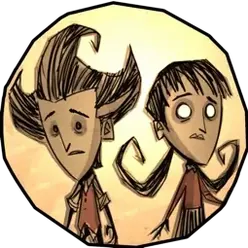
Don’t Starve Together 747465 Mac
Don't Starve Together runs on Macs with Intel or Apple Silicon processors, covering both 64-bit x86 and ARM architectures. Klei Entertainment lists English and Simplified Chinese as the interface languages.
Survival map — one shared world where you and another player gather, build, and try not to die.
Co-op — team up with a friend or a random online player; no solo-only restriction.
Standalone — the official Steam page describes it as a multiplayer expansion to Don't Starve, but it installs and runs on its own.
Why your host needs a wired connection to stop rubber‑banding
Multiplayer connection drops top the list of headaches, especially when one player's on Wi‑Fi and the other's wired. The host's upload bandwidth takes the real hit — if the host’s connection wobbles, everyone rubber‑bands. Switching the host to a wired connection or having the player with the most stable ping host usually clears it up.
Another recurring pain point: mod mismatches. When a friend subscribes to a different set of Steam Workshop mods than the host, the server refuses the connection with a cryptic "server mod mismatch" error. The fix is tedious but simple — both players unsubscribe from all mods, restart the game, then resubscribe to an identical list before the host creates the world.
On Apple Silicon Macs, some players report the game launching to a black screen after a macOS update. The culprit is often the fullscreen optimisation. Toggling the in‑game display mode to "Windowed" from the main menu options, then back to "Fullscreen" once a world loads, sorts it. If the menu itself won't render, holding Option while launching forces a resolution reset.
World rollbacks occasionally fail after a disastrous Deerclops visit. The rollback feature lives under the "Host Game" tab, not in the pause menu — a detail that trips up new hosts. Select the save slot, click "Manage World," and pick a day from the list. The game keeps the last five days of autosaves by default.
Silent 60 fps through frog rain on the M4 Mac mini
The M4 Mac mini pushes a steady 60 frames per second at 2560×1440 with most settings on high, even during frog rain with two players on screen. The fan stays silent through multi‑hour sessions — the game never pushed the chip past warm to the touch. On older Intel Macs, frame pacing stays smooth until a base grows past roughly forty structures and twenty planted berry bushes, at which point the host's machine starts hitching when both players sprint through the loaded zone.
RAM usage sits modestly around 1.2 GB for the host, slightly less for the client. CPU spikes happen during world generation — the procedural layout burns through a single core for about eight seconds on the M4 — then settles to a flat line. Caves add roughly 300 MB of memory pressure per connected player, but the engine handles the surface‑to‑cave transition without a loading screen, which keeps the tension alive when you're fleeing bats.
Stability is the quiet strength here. Across a dozen six‑hour sessions, the game crashed once — during a mod auto‑update while a hound wave spawned. Running without mods eliminated every crash. Autosave fires at the start of each day, so a crash rarely costs more than eight minutes of progress.
First Winter: A Two‑Player Workflow
Winter kills new players in the first three days if nobody prepared. Here's a workable sequence for a pair starting in autumn.
Day one through three, one player scouts the map edges for beefalo herds and rock biomes while the other camps near the portal, chopping trees and picking carrots. The scout marks wormholes and touchstones on the map with the compass icon. By dusk on day three, both meet at a central location near rabbit holes and a savanna patch — grass tufts matter more than trees at this stage.
Days four through seven lock down the essentials. The base builder drops a science machine, prototypes a backpack and a shovel, then digs up twenty grass tufts, ten saplings, and six berry bushes to replant in a tight grid. The scout crafts a thermal stone and pre‑builds a fire pit at a second location near a spider den. Both players craft a razor and shave the beefalo herd at night for wool — fuel for the winter fire and material for a winter hat.
Day eight through twelve, the scout hunts a clockwork rook for gears while the builder walls in a small grass pen and crafts a crock pot. The first meatballs hit the pot using monster meat from spiders and filler from berries. The builder drops a chest with two thermal stones, swapping one out to warm by the fire while the other goes into inventory.
When snow hits on day twenty‑one, both players equip a winter hat or beefalo hat. One tends the base farms and cooks while the other hunts koalefants for the trunk — the puffy vest buys an extra half‑day away from the fire. Neither player strays more than half a screen from the base without a pre‑warmed thermal stone. Ice hounds start appearing; the scout kites them back to the tooth trap field laid near the spider den, and both players clear the loot together.
You don’t both need the original game to play Together
Does a friend need to buy the same version? No. Don't Starve Together works as a standalone title — your friend doesn't need the original Don't Starve. One copy of Together per player is enough. The game runs its own server through Steam's networking, so no separate server software download is required.
Can a Mac player host for someone on Windows? Yes. Cross‑platform play between macOS, Windows, and Linux works by default. The host creates a world, and the client joins through the Steam friend list or a server browser. Ping depends on geographic distance, not operating system.
Do mods from the single‑player game carry over? No. The Workshop items for Don't Starve Together are separate from the original Don't Starve. Some popular single‑player mods have Together equivalents, but you'll need to subscribe to them again inside the Together Workshop listing. Character mods require both players to have them active.
How long does a typical session last before things go wrong? A well‑prepared pair can survive indefinitely, but the first major threat spike comes around day thirty‑one — that's when Deerclops spawns and levels an unprepared base in under a minute. Players who rush a football helmet and a ham bat by day twenty‑five usually push through. The real test is spring's frog rain, which shreds unarmored players faster than winter cold.
Performance — on a 2024 Mac mini with M4 running macOS Tahoe, the game handles the shared map without requiring a separate server setup.
- macOS — runs on current Mac systems
- Architecture — Intel 64-bit and Apple Silicon
- Interface languages — English, Simplified Chinese
- Version
- 747465
- Download
- 2.8 GB
- Developer
- Klei Entertainment
- Languages
- English, Chinese (Simplified)
- Activation
- Not required
- Architecture
- Apple Silicon, Intel 64-bit
- Tested on
- macOS Tahoe, Mac mini 2024 M4
- Release date
- 21.04.2016
- Voice
- Music only
Questions readers asked
Yes, Klei Entertainment supports co-op with a friend or with a random online player on a shared map.
Sign in or open a desk account to write a letter.
No letters on this brief yet. They are read before they run.






 Top
Top