

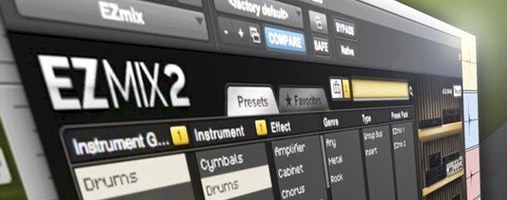
Toontrack EZmix Bundle 3.2.2 Mac
Dialing in a finished sound on a drum bus or vocal track often means stacking five or six plug-ins and hoping they work together. EZmix 3 collapses that chain into a single preset, built from mastering-grade effects, reverb algorithms, and guitar and bass amp simulations.
The plug-in loads on any sequencer channel strip — just insert it, pick a preset for drums, vocals, guitar, bass, or keyboards, and the audio is processed immediately. On the Mac, it runs natively on both Intel and Apple silicon machines under macOS 10.13 or later. An independent host application is included as well, giving guitar players a lightweight practice rig with the same amp and cab models.
Version 3.2.2 adds support for EZmix expansion packs released from the fourth quarter of 2025 onward. Every earlier EZmix function and piece of content stays intact, so sessions built in EZmix 2 translate without a hiccup. The interface remains a single-window affair — scroll through categories, audition a sound, and move on.
First days with EZmix 3
Drop the plug-in on a channel and the preset list can feel overwhelming. A better first move is to narrow the browser to a single instrument category — vocals, for instance — and audition three presets on the same dry clip. Switch between them while the loop plays. The differences in compression curve and reverb tail become obvious fast, and that ear training pays off later when you need to match a reference track.
Many users search out an ezmix 3 torrent to explore the full bundle before committing to a workflow, and the included host application makes that exploration immediate. Launch the standalone app, plug in a guitar, and cycle through the amp and cab models without opening a DAW. It is the quickest way to learn what the cabinet simulations do to your DI signal before you ever hit record.
Cut latency for tighter palm mutes in standalone mode
Open the plug-in preferences and check the buffer size. The default works for mixing, but the standalone host for guitar practice benefits from a smaller buffer — 128 samples or lower cuts latency enough that palm muting feels responsive rather than spongy.
Next, turn off the auto-gain compensation for your first few sessions. The feature keeps output levels consistent as you flip through presets, which is useful for final comparisons, but early on you want to hear exactly how hard a preset drives the input. With compensation off, a bass amp model that slams the virtual preamp is immediately distinguishable from one that stays clean.
Reverb-heavy vocal presets also deserve a quick tweak: open the wet/dry mix control and pull it back by 15 to 20 percent. The default balance works in a dense mix, but in a sparse arrangement the same setting can push a vocal too far back. Saving the adjusted version as a user preset takes two clicks and builds a personal library faster than most people expect.
Swap the room reverb that turns muddy in headphones
A guitarist opens the standalone host on a MacBook Pro, plugs in, and selects a British-style amp model with a 2x12 cabinet. The preset includes a room reverb that sounds good at desk volume but gets muddy through headphones, so the reverb mix is dialed back to 25 percent. Ten minutes of practice later, a chord progression sticks — it would suit the chorus of a half-finished project. The host closes, the DAW opens.
The project file already has a dry DI guitar track. EZmix 3 is inserted on the channel, and the same amp preset from the practice session is loaded. The DI signal transforms into a cranked stack sound with no additional plug-ins. A drum bus follows: one preset pulls together EQ, compression, and a touch of saturation. The kick and snare snap forward without the low-end rumble that was masking the bass guitar.
The bass track is next. A preset labeled for fingerstyle playing tightens the low mids and adds subtle overdrive. The mix is nearly there. On the master bus, a mastering-style preset applies a final EQ curve and a limiter. The whole session — four channels, one plug-in per channel — comes together in under fifteen minutes. No chain of five plug-ins, no guesswork about gain staging between them.
Users who grab an ezmix 3 free download to test the bundle often discover that the mastering presets alone replace two or three utilities they used to stack manually. The workflow becomes: insert, select, tweak one macro knob if needed, and move on. For guitarists, the amp models respond to picking dynamics well enough that a practice session in the standalone host often ends with a recorded idea worth keeping.
EZmix 3.2.2 ensures compatibility with expansion packs released from the fourth quarter of 2025 onward. No other changes are noted by the developer.
- macOS 10.13 or later
- Intel or Apple silicon processor
- Version
- 3.2.2
- Download
- 977 MB
- Developer
- Toontrack
- Languages
- English
- Activation
- k'ed by Team V.R
- Compatibility
- macOS 10.13 or later
- Architecture
- Apple Silicon, Intel 64-bit
Questions readers asked
Yes, according to Toontrack, EZmix 3 runs natively on both Apple silicon and Intel processors.
The bundle ships with preset chains for drums, vocals, guitar, bass, and keyboards.
Sign in or open a desk account to write a letter.
No letters on this brief yet. They are read before they run.







 Top
Top