

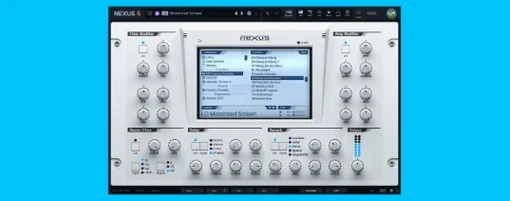
reFX Nexus 5.5.21 Mac
For producers accustomed to working inside a DAW's stock sampler, NEXUS shifts the model from simple playback to a deeper synthesis and editing environment. It runs as a plugin on macOS 10.15 and later, supports both Intel and Apple Silicon hosts, and loads in any VST, AU, or AAX-compatible application. The architecture still centers on layered samples, but version 5 opens access to custom sample loading, letting users drag in their own audio and edit it directly within the instrument using slice, loop, and crossfade tools.
On the modulation side, a routing matrix connects sources to destinations across the engine. As of version 5.5.12, active modulation tracking appears in depth rings and tooltips, and a new destination for oscillator phase minimum and maximum gives finer control over stereo width and transient alignment. The unison overhaul pushes voice counts up to 16, moving well past simple thickening into territory that can be tuned and spaced precisely.
The built-in effects rack and the ability to build custom expansions keep the library from feeling locked down. A new Clipper effect in 5.5.12 adds a clean way to shave peaks before the output stage, while the arp pattern can now seed the initial sequencer pattern, tightening the link between rhythmic and melodic ideas. The skin editor rounds out the release, offering a way to tailor the interface to the session, not the other way around.
Drag-and-drop sample loading skips the external editor
Beatmakers and electronic producers who already lean on sample-based textures tend to feel at home fastest, because the drag-and-drop sample loading removes the friction of switching to an external editor just to trim a loop or adjust a crossfade. Sound designers working in film or game audio benefit from the multi-oscillator architecture — blending a wavetable layer with a granular cloud and a sub from the virtual-analog engine yields complex, moving pads that are hard to build inside a conventional rompler. Mix engineers who handle electronic projects also find the Clipper effect useful as a fast safety net on channel inserts, catching stray transients before they hit a bus compressor.
Users upgrading from earlier NEXUS versions or moving from a reFX Nexus 2 Mac workflow will notice the expanded modulation routing immediately; the ability to see active modulation sources in the depth rings means less guesswork when revisiting a patch weeks later. Producers searching for reFX Nexus Mac torrent builds often want the full expansion ecosystem, and the custom expansion creation tools mean a sound designer can package a personal kit — complete with its own routing presets and effect chains — just like an official library.
Lock arp and sequencer rates to an internal tempo
The SYS page BPM readout and override option deserves a visit early. By default, tempo-synced elements follow the host, but engaging the manual override locks arp and sequencer rates to an internal tempo, which is handy when you want a riff to sit against a half-time beat without recalculating delay times. On the modulation tab, switch the unison mode from the default spacing to a tighter, detuned cluster if you are designing a bass patch; 16 voices spread wide sound lush on pads but muddy low-end transients. Narrow the spread and reduce the voice count to four or six for anything that needs to punch through a dense mix.
The keyzone trigger for the Ducker, added in 5.5.12, ships in an off state. Assigning it to a specific range — say, C3 and above — lets a kick drum sample duck a pad layer only when the kick hits, leaving the lower octaves of the pad untouched. It is a small routing change that cleans up a busy arrangement without adding a sidechain compressor to the channel strip.
Building a layered bass patch, step by step
This workflow pulls together the new Clipper, the unison overhaul, and custom sample loading to create a bass sound that stays controlled while filling the low end. The goal is a patch that combines a sampled sub hit with a wavetable growl, locked to the host tempo.
- Open a blank NEXUS instance and clear the default oscillator slots.
- In oscillator A, load a short 808 sample — something dry with a clean pitch tail. Set the start point just after the initial click.
- In oscillator B, choose a wavetable oscillator and browse to a morphing bass table. Tune it an octave above oscillator A so it cuts through on smaller speakers.
- Enable unison on oscillator B only, set voices to four, and narrow the stereo spread to about 20 percent. Detune lightly for movement without phase cancellation in mono.
- Route both oscillators through the new Clipper effect on the insert chain. Push the threshold until the combined waveform flattens by roughly 2 dB on the loudest hits, then back it off slightly.
- Open the modulation matrix and assign a velocity source to oscillator B's wavetable position, so harder notes push the growl forward in the table while soft notes stay round.
- On the SYS page, engage BPM override at 140 bpm and set the arp pattern as the initial sequencer pattern. Draw a simple four-note line with a rest on the fourth step — this locks playback to 140 regardless of the DAW tempo, keeping the bass phrasing consistent when the project tempo shifts later.
- Save the patch as a custom preset and tag it with the key and oscillator types so it surfaces quickly in a search.
The result is a bass that stays tight on sub frequencies, has a midrange bite from the wavetable layer, and never accidentally clips the output because the Clipper catches peaks before the final gain stage. Producers who move between a reFX Nexus 5 torrent setup and commercial libraries can export the entire patch as a custom expansion, keeping the samples and routing intact across machines.
The 5.5.21 update lands with a raft of skin-editor improvements and interface fixes. The Skin Editor can now style dialog windows, covering background, title, text and buttons. A new context-menu option in the skin browser lets you open a skin file directly. Color names inside the editor no longer show internal prefixes, and the Impulse oscilloscope now shares its color scheme with the other effect displays.
Several bugs got squashed: loading, saving and displaying skin thumbnails that use dots in their names works again. Knob colors now save correctly after switching from a light skin back to the default. The oscilloscope layout inside the Impulse import window has been fixed, as has the text refresh in an open dialog when you change skins. Double-clicking Save As no longer re-opens the window.
- macOS 10.15 or later
- Apple Silicon or Intel 64-bit processor
- Version
- 5.5.21
- Download
- 72 MB
- Developer
- reFX
- Languages
- English
- Activation
- k'ed by Team V.R
- Compatibility
- macOS 10.15 or later
- Architecture
- Apple Silicon, Intel 64-bit
Questions readers asked
Yes, version 5.5.12 runs natively on Apple Silicon and Intel Macs running macOS 10.15 or later.
Sign in or open a desk account to write a letter.
No letters on this brief yet. They are read before they run.




 Top
Top